
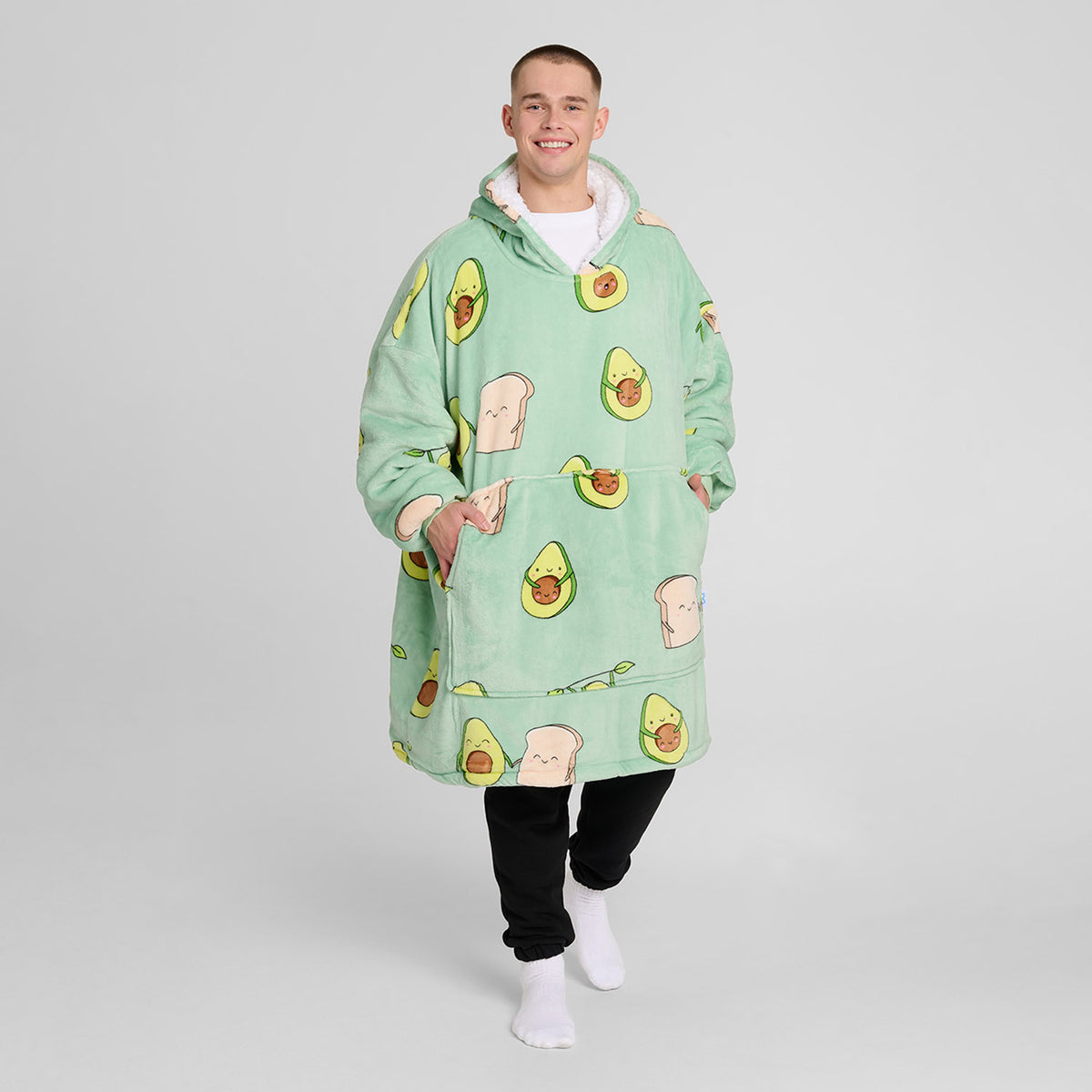
The Oodie is a rare bootstrapped e-commerce story that reached serious scale. Founder Davie Fogarty says the brand grew from A$1.6 million in sales in 2019 to A$184 million in 2022. The current site says more than nine million Oodie Originals have been sold.
The product was easy to understand, easy to demonstrate and unusually giftable. Paid social could show the whole value proposition in seconds. One generous size reduced fit friction. Prints and licences kept the same product visually fresh. International expansion allowed the team to sell winter comfort across several large markets.
Then the curve changed. Davie Group revenue fell to A$107.1 million in the year to June 2025, down 27.9% and roughly half the group peak reported for 2022. The group recorded a A$647,363 loss after an A$8.7 million profit the previous year. Some of that decline came from exiting other businesses, so it cannot be treated as a clean brand-only comparison. But sales also fell in every major disclosed Oodie market.
The operator lesson is not that hero products are bad. The Oodie proves how powerful they can be. The lesson is that a strong acquisition product and a strong repeat-purchase system are different things. Range expansion can solve that gap, but it can also turn a simple business into an inventory problem.
01 / VERIFIED BUSINESS SNAPSHOT
The peak was exceptional. The normalisation was real.
| Metric | Latest reliable figure | Period | Evidence |
|---|---|---|---|
| Revenue | A$107.1m, down 27.9% | FY ended Jun 2025 | Davie Group accounts reported by The Advertiser |
| Profit / loss | A$647,363 loss; prior-year profit A$8.7m | FY2025; FY2024 | Group accounts. Founder later claimed A$8m pre-tax profit in first half FY2026 |
| Brand sales at peak | A$184m | 2022 | Founder disclosure. Group peak was reported at A$212.5m |
| Employees | 51 to 200 | Oct 2026 | LinkedIn company range, not an audited headcount |
| Funding | No external funding disclosed | Since 2018 | Founder says the group never raised funding |
| Valuation / exit | No disclosed transaction or exit | Oct 2026 | Private and founder controlled |
| Markets | UK A$41.9m; Australia A$39.3m; US A$9.5m | FY2025 | Group market sales reported from filed accounts |
| Channel mix | Not disclosed | Oct 2026 | Digital-first, with Amazon and wholesale activity visible |
Group revenue and Oodie brand revenue are not always interchangeable. The group previously owned other businesses and exited loss-making entities before refocusing on The Oodie.
02 / THE GROWTH ENGINE
The ad did not need much explaining.
Many products need education before they can scale. The Oodie needed a person wearing it. The size looked ridiculous in a useful way. The fleece and sherpa lining communicated warmth. The hood, giant pocket and bright prints made the product visually recognisable. The name gave a generic object a category identity.
That made paid social a natural fit. The creative could demonstrate comfort, humour and gifting without a long landing page. Fogarty has repeatedly described paid acquisition as a core skill and documented a A$1.1 million sales day during the 2021 peak. These are founder claims, not independently audited channel data, but the operating model is visible: develop many creatives and prints, find winners quickly, put budget behind them and repeat across countries.
Visually obvious paid-social creative generated demand; a memorable name and giftable prints lifted conversion; winning designs funded more inventory, licences and localised launches; customer reviews then reduced risk for the next buyer.
Timing mattered. The Oodie launched in 2018 and entered the pandemic with a product made for staying home. Lockdowns did not create the business, but they expanded the use case and accelerated e-commerce adoption. The team could then move through Australia, the UK, the US, Canada and New Zealand, using local storefronts, currencies and fulfilment.
The product also contains its own retention problem. A well-made wearable blanket does not need frequent replacement. Prints encourage collection and gifting, but those are not the same as natural replenishment. The Oodie therefore expanded into sleep tees, pyjamas, robes, blankets, loungewear, outerwear, shoes, pet products and accessories. That created more occasions to buy. It also multiplied forecasts, sizes, fabrics, licences and clearance risk.
03 / PRODUCT AND PRICING
The product was simple. The price architecture is no longer simple.
The Oodie Original is not difficult to copy. It uses a polyester flannel-fleece outer, sherpa-fleece lining, an oversized hood and a large pocket. The brand now calls its outer fabric ToastyTek and highlights OEKO-TEX certification, but the durable differentiation is mostly brand, creative execution, prints, licences, reviews and distribution rather than protected product technology.
The current Australian list price for a classic Original is A$99. Licensed versions reach A$119. In the US, current classics are US$89 and a new licensed Original is US$109. This is a meaningful premium over generic wearable blankets.
The realised price can be much lower. Australia currently offers two classic Originals for A$139, versus A$198 at list price. The US offers two for US$119, versus US$178. The Australian site is also running 30% off selected styles, 20% multi-buys across several adjacent categories and 15% off a first app order.
Those mechanics serve several jobs. Bundles lift units per order and make gifting easier. Licensed drops create novelty. Promotions clear seasonal and design-specific inventory. The risk is that customers learn to treat the list price as a reference rather than the real price.
Returns are allowed within 30 days, but customers pay the return shipping fee and final-sale items are excluded unless faulty. Returning part of a bundle removes the bundle discount and reprices the kept item at the current sale price. That protects order economics more than a free-return model would.
04 / MARKETING MIX AND ATTRIBUTION
The creative system mattered more than channel novelty.
The original scaling engine. Short visual demonstrations made the product understandable before the click.
Humour, reactions, gifting and customer content made the ads feel native to social feeds.
Disney, Marvel, Harry Potter, Pokémon and dozens of other licences borrow existing demand and refresh the core silhouette.
New prints, seasonal drops and app-only discounts create reasons to return despite low replenishment.
The company claims more than 300,000 five-star reviews, reducing uncertainty around an unfamiliar premium product.
Amazon listings and wholesale enquiries extend availability, although current channel contribution is not disclosed.
The Oodie does not disclose current media spend, CAC, ROAS, AOV, repeat rate, contribution margin or channel shares. The founder has discussed heavy Facebook advertising, but that does not prove current efficiency. Revenue growth during lockdowns also cannot separate good paid acquisition from an unusually favourable demand environment.
Last-click would miss the role of licences, reviews and social exposure. A Harry Potter fan may first encounter a licensed drop organically, see several paid ads, search the brand and finally convert through an app promotion. Search or app would receive the order credit even though neither created the original desire.
Management therefore needs more than platform ROAS. The useful view is contribution after discounts, licence royalties, freight, returns and fulfilment, split by market, product family and customer cohort. For the core product, new-customer payback matters. For extensions, the harder test is whether existing customers buy them without equally expensive reacquisition.
05 / COMMERCIAL REALITY
Inventory became the bill for creative abundance.
A hero product can make early operations look easier than they are. One shape, one broad size and a repeatable construction reduce development complexity. But hundreds of prints and licensed collections still create hundreds of demand forecasts. Add sleepwear, robes, blankets and outerwear, and the simple product company becomes a seasonal apparel portfolio.
The company describes the consequence unusually clearly on its careers page. CEO Belinda Barlow says that when she arrived, the business did not know what it had ordered, suppliers were shipping products to fill containers and the team did not properly know what it was paying. It took three months to map stock in production.
The FY2025 accounts show what happens when growth stops absorbing complexity. Group revenue fell 27.9%. Australia declined 21.5%, the UK 9.3% and the US 67%. The group moved from A$8.7 million profit to a A$647,363 loss. Fogarty attributed the result partly to one-off impairments, warehouse transitions, exits from other businesses and bulk discounting to clear seasonal UK stock. Those explanations are plausible, but they also identify the exact commercial risks: range sprawl, fulfilment change and excess inventory.
The model still has real strengths. It was built without disclosed institutional funding. The founder says the group returned to about A$8 million of pre-tax profit during the first half of FY2026 after restructuring. That is a company claim, not yet a filed annual result, but it suggests the core brand may remain cash-generative once the portfolio is simplified.
06 / THE DECISIONS THAT CHANGED THE OUTCOME
Five choices built the scale and the constraint.
Give a generic product a memorable identity
Logic: Make a wearable blanket feel like a named category. Result: The Oodie became easier to search, share and remember. Cost: The physical product remained easy for lower-priced competitors to imitate.
Push the same creative system across markets
Logic: The emotional promise travelled well and winter moved between hemispheres. Result: Sales accelerated from A$1.6 million in 2019 to nine figures. Cost: Global inventory and fulfilment became harder to control.
Turn prints and licences into product cadence
Logic: Refresh a low-frequency silhouette and capture fandom demand. Result: More than 500 styles had been developed by 2022; the company now claims 50-plus partnerships. Cost: Royalties, forecasting complexity and markdown exposure increased.
Move the founder out of the CEO role
Logic: Replace founder-led hypergrowth with operating discipline. Result: COO Belinda Barlow became CEO. Cost: Professional management still had to untangle a supply chain built during extreme growth.
Exit distractions and return to the core
Logic: Stop funding loss-making group businesses and simplify the portfolio. Result: Management says first-half FY2026 returned to profit. Cost: The reported group became smaller and the durability of the recovery still needs a full-year filing.
One failure deserves separate attention. In 2024, Davie Clothing paid more than A$100,000 after the ACCC alleged that 2,460 Kids Beach Oodies had been supplied without required high-fire-danger warning labels. The company recalled the products and committed to a compliance programme. Category expansion does not only add inventory. It adds new safety, labelling and quality-control obligations.
07 / WHAT WORKED, WHAT DID NOT
What created durable value
- A product proposition visible in one second of video.
- A name that became closely associated with the category.
- One-size simplicity that reduced early conversion and inventory friction.
- Prints and licences that refreshed a stable product architecture.
- Bootstrapped expansion that preserved control and forced attention to cash.
What weakened the model
- Low natural replacement frequency for the original product.
- Easy physical imitation and aggressive low-cost competition.
- Hundreds of designs and extensions creating forecasting risk.
- Promotional depth that can weaken the credibility of list prices.
- Operational and compliance systems that lagged behind range growth.
08 / THE OPERATOR PLAYBOOK
Use the hero to earn complexity. Do not assume it pays for complexity forever.
| Copy | Adapt carefully | Avoid |
|---|---|---|
| Choose a product whose value is obvious inside the ad. | Use prints and licences to refresh demand only when sell-through data can govern buys. | Confusing early paid-social scale with durable repeat purchase. |
| Reduce fit and choice friction around the initial hero. | Localise inventory and creative by climate, market and fandom. | Adding categories faster than planning, quality and compliance systems can absorb them. |
| Build bundles around real gifting and household use cases. | Use promotions to manage stock without training every customer to wait. | Using top-line revenue to hide markdowns, obsolete stock or loss-making extensions. |
Stay brutally narrow. Make the product understandable without explanation and test whether customers buy for themselves, as gifts or both. Keep variants low until repeatable creative and sell-through are proven.
Build market-level forecasting, purchase-order control and landed-cost visibility before multiplying designs. Separate new-customer hero economics from cross-sell economics. A second product should improve customer value, not only add revenue.
Measure contribution after discount, royalties, freight, returns and clearance. Give supply-chain, quality and compliance leaders authority equal to growth. Rationalise the range before a slowdown forces the decision.
09 / MY COMMERCIAL VERDICT
An exceptional growth business had to learn portfolio discipline.
The Oodie was an exceptional bootstrapped growth story. It combined a visually obvious product, a memorable name, strong paid-social execution and fortunate timing. Growing a A$1.6 million brand into a business capable of nine-figure annual sales without disclosed outside capital is difficult to dismiss.
It was never protected by deep product technology. The real capability was demand execution: creative volume, rapid product feedback, localised expansion, gifting and licences. That system was strong enough to make a simple product travel globally.
The decline matters because it exposes the other half of the model. A hero product with low replacement frequency eventually needs either new customers, new occasions or new categories. The Oodie pursued all three. The broader range created repeat opportunities, but also inventory, markdown and compliance risk. The pandemic amplified demand, and a new brand starting now should not assume the same tailwind or paid-media economics.
My single takeaway is this: a hero product earns the right to expand. It does not remove the need to prove every extension on sell-through, contribution and repeat behaviour.
SOURCES AND METHODOLOGY
The evidence behind this issue.
Latest financial figures are from reporting on Davie Group accounts filed with ASIC. The group previously included businesses beyond The Oodie, so group and brand revenue are kept separate where possible. Product, pricing and promotional terms were checked on 4 October 2026. The company does not disclose current CAC, ROAS, AOV, repeat rate, contribution margin or channel mix. I have not estimated them.
- Davie Group FY2025 accounts reporting The Advertiser, 16 January 2026
- Founder handover and 2019 to 2022 sales figures Davie Fogarty, LinkedIn, 2022
- The Oodie: The Fad That Stuck Around Add To Cart interview, 20 February 2023
- Founder comments on cumulative sales and category timing Davie Fogarty, LinkedIn, accessed 4 October 2026
- The Oodie About Us Company claims on customers, units and partnerships, accessed 4 October 2026
- Avocado Oodie Original product page Australian pricing and product specification, accessed 4 October 2026
- The Oodie promotion terms Current multi-buy, app and promotional mechanics, accessed 4 October 2026
- Delivery and returns Australian fulfilment and return terms, accessed 4 October 2026
- The Oodie leadership profiles Company commentary on rapid-growth operating problems, accessed 4 October 2026
- Kids Beach Oodie enforcement action ACCC Product Safety, 17 July 2024
- The Oodie company profile LinkedIn employee range, accessed 4 October 2026
ECOM ORIGINALS
One consumer brand. One useful operating case. Every week.
Subscribe for practical lessons on growth, product, pricing and marketing, and join operators and founders comparing what actually works.
When a hero product still acquires customers but repeat purchase is weak, would you add more variants, launch an adjacent category or accept a smaller business? Reply to the email or share your view when this issue appears on LinkedIn.